How to Play Christmas Bingo with Kids: Rules, Variations & Tips
How to play Christmas bingo with kids: what you need, simple rules, five ways to win, fun variations by age and tips for hosting a class party or family game night.
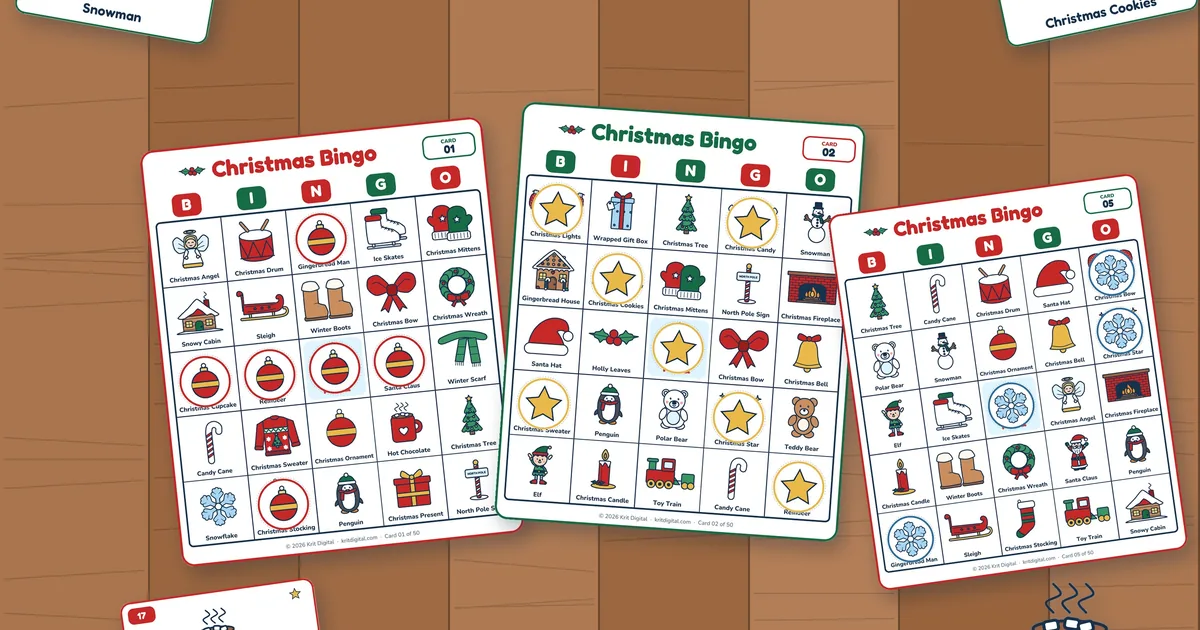
Bingo is a rare game that works for a four-year-old, a teenager and Grandma at the same table. Add Christmas pictures, a bowl of calling cards and a few markers, and you have an easy holiday game that fills an afternoon. If you’ve never run one before, this guide explains how to play Christmas bingo with kids, from the basic rules to fun variations and tips for big groups.
What you need
- Bingo cards: one per player, each with a different arrangement of Christmas pictures. Picture cards with the name under each picture are best for young kids.
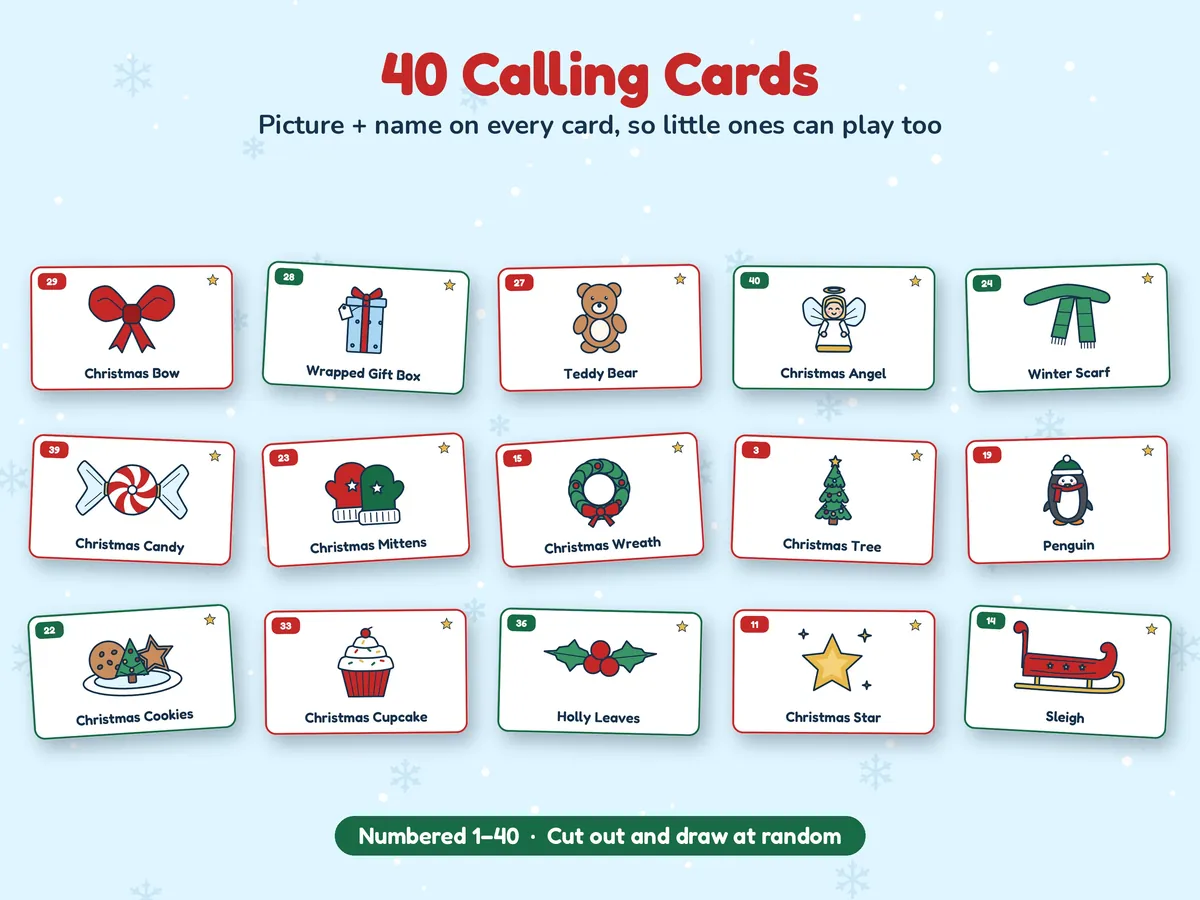
- Calling cards: one card for every picture that can appear on the bingo cards. These go in a bowl, bag or Santa hat.
- Markers: printed paper markers, buttons, mini marshmallows or wrapped candies.
- A caller: an adult, or an older kid who’d love the job.
- Optional: a tracking sheet to tick off what’s been called, and a few small prizes.
How to set up the game
- Print the cards. Print one bingo card per player. If you plan to play again, use cardstock or slip the cards into sheet protectors.
- Cut out the calling cards and put them in a bowl. Give it a good shake.
- Hand out cards and markers. Give everyone a pile of markers. Twenty-five per player is enough for a full card.
- Explain the free space. Most Christmas bingo cards have a FREE SPACE in the middle. It counts as already marked, so players can cover it right away.
- Choose the pattern for the first round, and show it so everyone knows what they’re aiming for.
Christmas bingo rules, step by step
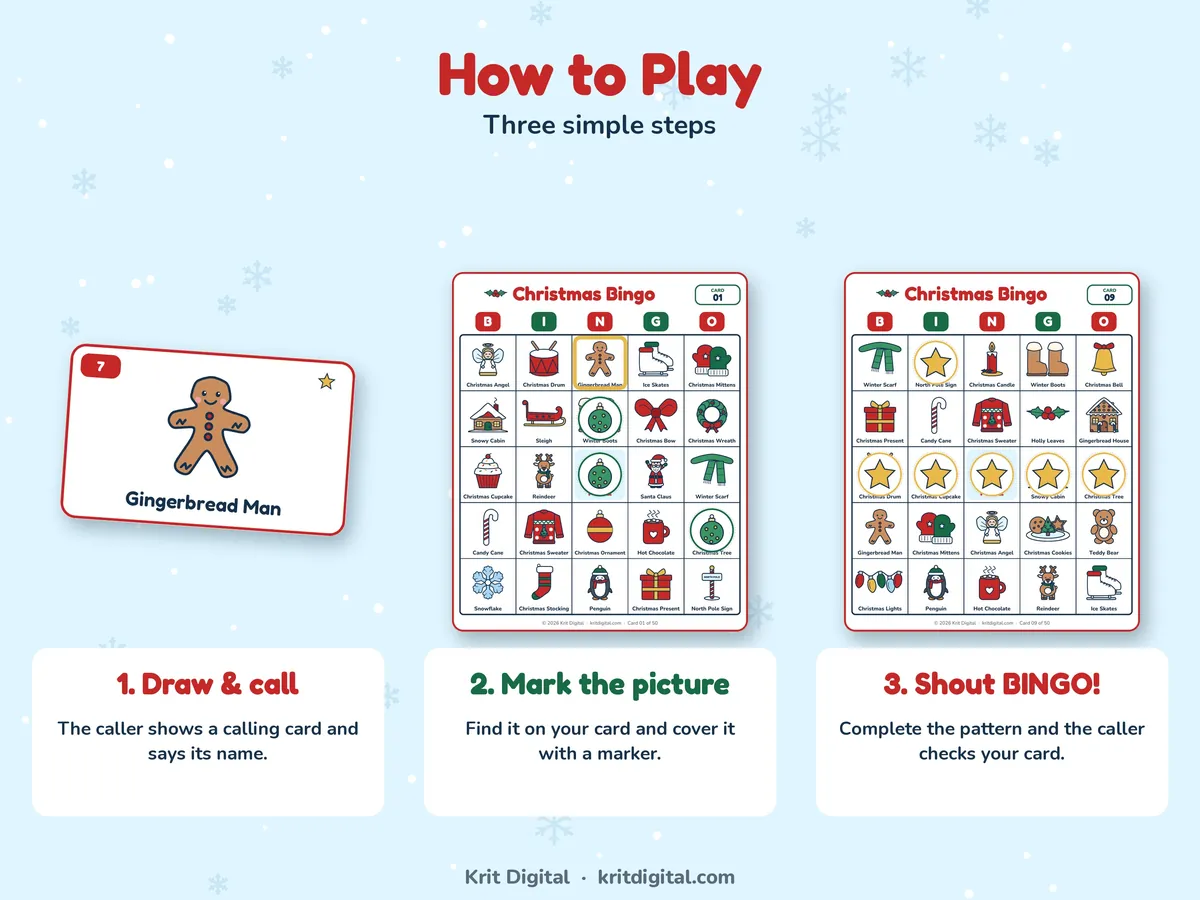
- Draw and call. The caller draws one calling card, shows the picture to the group and says its name out loud: “Gingerbread man!”
- Look and mark. Everyone checks their card. Anyone who has that picture covers it with a marker.
- Keep track. The caller sets the calling card aside or ticks it off on a tracking sheet, so it’s easy to check a winning card later.
- Shout BINGO! When a player completes the pattern, they shout “Bingo!”
- Check and cheer. The caller reads back the covered pictures. If they’ve all been called, that player wins the round.
Then clear the cards, put the calling cards back in the bowl and start a new round.
5 ways to win Christmas bingo
Changing the winning pattern keeps the game fresh, even after several rounds.
| Pattern | How to win | Good for |
|---|---|---|
| One row | Cover all 5 squares across | First round and the youngest players |
| One column | Cover all 5 squares down | A quick second round |
| One diagonal | Cover 5 squares corner to corner through the middle | Kids who’ve got the hang of it |
| Four corners | Cover just the 4 corner squares | A fast, exciting round |
| Blackout | Cover every square on the card | The grand finale |
Tip: Blackout takes the longest, so save it for the last game while everyone is still having fun.
Tips for playing with different ages
Ages 4–6: Use large cards with big pictures. Say the name, then hold up the picture and give kids a few seconds to look. Sit little ones next to an older helper, and stick to simple patterns like one row.
Ages 7 and up: Try smaller cards or let kids play two cards at once. Introduce four corners, diagonals and blackout. Older kids also make great callers.
Mixed ages: Everyone can play the same game, since picture bingo doesn’t depend on reading. Give younger kids an extra-big marker and let older kids help check the winning card.
8 fun Christmas bingo variations
- Candy bingo. Use mini marshmallows, chocolate chips or wrapped candies as markers. Winners get to eat their markers at the end of the round. Check for allergies first.
- Riddle bingo. Instead of naming the picture, the caller gives a clue: “I’m brown, I’m made of dough and I run away from the baker.” Great for ages 6 and up.
- Spelling bingo. For early readers, spell the word instead of saying it: “S-L-E-I-G-H.”
- Act-it-out bingo. The caller acts out each picture, like ice skating or drinking hot chocolate, and players guess what it is.
- Team bingo. Pair up kids, one card per team. It’s a good fit when you have more players than cards, and it helps shy kids join in.
- Mystery pattern. Don’t reveal the winning pattern until someone thinks they’ve won. Kids love the suspense.
- Speed round. The caller draws a little faster each time. Best for older kids who already know the pictures.
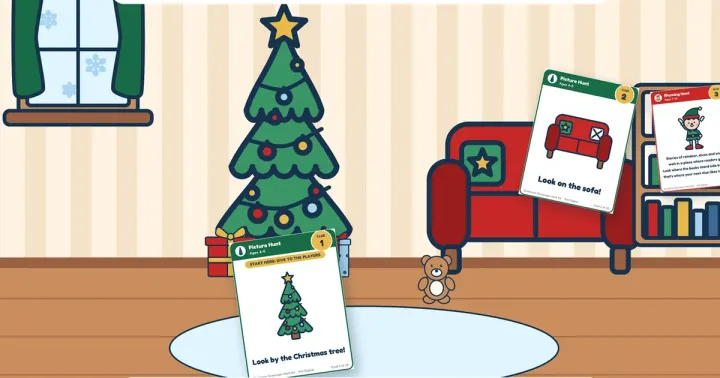
- Scavenger hunt bingo. Take the cards around the house and cover each picture when you find it in real life: a wreath, a candle, a Christmas tree.
Hosting Christmas bingo at a class party
Christmas bingo is a classic last-day-before-break activity, because it calms a room down without stopping the fun.
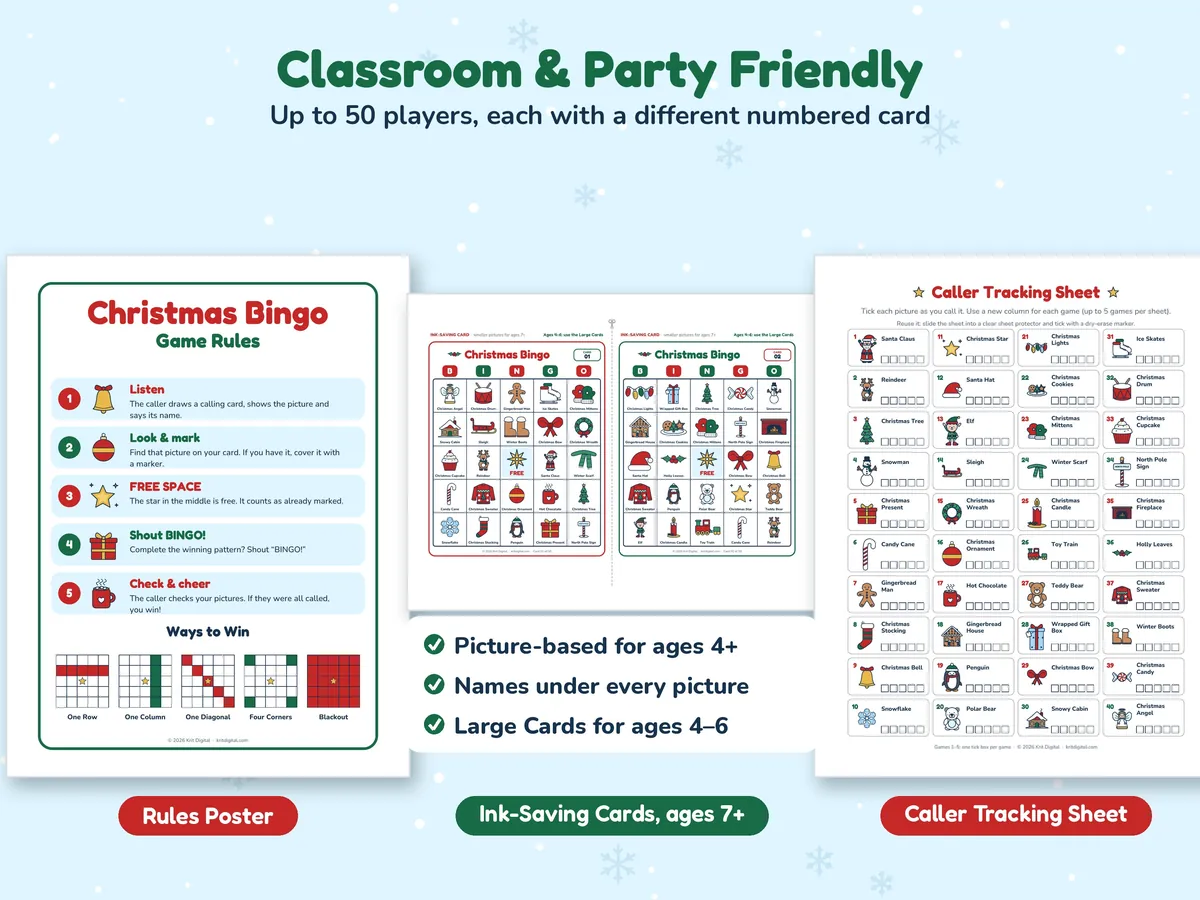
- Prep the night before. Print one card per student, cut the calling cards and put each child’s markers in a cup or bag. Handing out loose markers during the party takes longer than you think.
- Number the cards. Numbered cards make it easy to check a winner, and you can reuse the same cards next year.
- Put the rules where everyone can see them. Tape a rules poster to the board, or draw the winning pattern for each round.
- Plan for ties. If two kids shout “Bingo!” on the same call, both win. Keep enough prizes for that.
- Let a parent volunteer call. It frees you to help kids find their pictures.
- End with blackout. Keep playing until most kids have covered their whole card, then give everyone a small treat.
Prize ideas that don’t break the budget
You don’t need big prizes. Kids get just as excited about:
- Stickers, pencils, erasers or candy canes
- A printable winner certificate with their name on it
- Being the next caller
- Choosing the next song, game or story
- A paper crown or Santa hat to wear for the next round
Make your bingo cards last
Printing on cardstock makes cards sturdier. For reusable cards, slip each one into a sheet protector and let kids mark squares with a dry-erase marker. A simple envelope or zip bag keeps calling cards and markers together for next year. Print at 100% or “Actual size” so everything fits on the page. Our guide on how to print digital downloads covers paper and print settings in detail.
A ready-to-print Christmas bingo set
If you’d rather skip the prep, our Christmas Bingo Printable has everything in this guide ready to go:
- 50 unique picture bingo cards, numbered 01–50, so up to 50 players each get a different card
- Large cards for ages 4–6 and Ink-Saving cards (two per page) for ages 7+
- 40 calling cards with pictures and names
- Bingo markers in 4 designs and 2 sizes
- A rules poster with all five ways to win, a caller tracking sheet and an 8-page instruction booklet
- 10 winner certificates and a storage envelope
- US Letter and A4 PDFs, in color and grayscale
More Christmas fun to pair with bingo
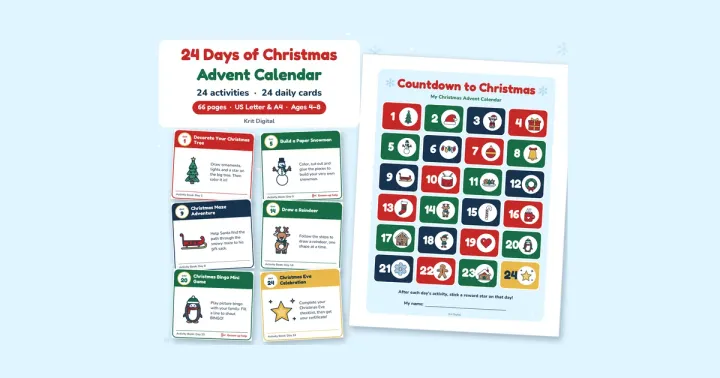
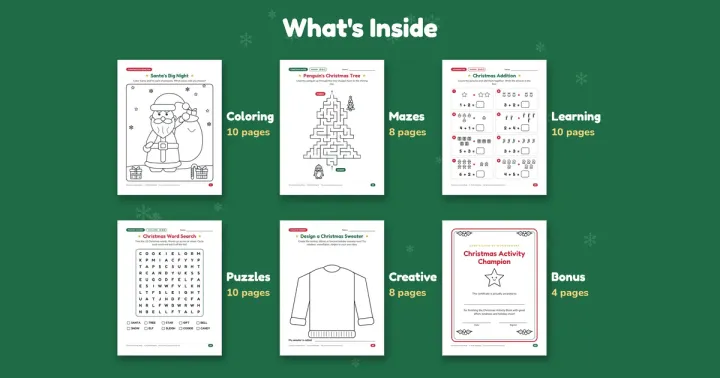
Bingo is a great centerpiece, but it helps to have a few quiet activities ready for after the game. Our guide to Christmas activity pages for kids has coloring, maze and puzzle ideas by age, plus a 12-day countdown plan. If you want all of those in one download, the Christmas Activity Book for Kids has 50 printable activities for ages 4–8. Planning a whole party? A Christmas scavenger hunt gets kids moving after the game. Counting down to Christmas? See our advent calendar activities for kids, with a mini bingo game on day 20. You’ll also find free downloads on our free printables page.
Have fun, and may the luckiest elf win.
Frequently asked questions
How do you play Christmas bingo?
Each player gets a different bingo card with Christmas pictures. The caller draws a calling card, shows it and says its name. Players who have that picture cover it with a marker. The first player to complete the agreed pattern, such as a full row, shouts "Bingo!" and the caller checks their card.
What age can kids play Christmas bingo?
Picture bingo works from about age 4, because kids only need to match pictures. Names under the pictures help early readers. Kids around 7 and up can handle smaller pictures, two cards at once or harder patterns like four corners and blackout.
What can I use as bingo markers?
Printed paper markers, buttons, pom-poms, mini marshmallows, wrapped candies, coins or dried beans all work. For very young kids, pick something big enough to grab easily. If you use food, make sure it's safe for everyone's allergies.
How long does a game of Christmas bingo take?
It depends on the pattern and the number of pictures. A single-row game is usually quick, while blackout takes the longest because every square must be called. Start with a row or column, then save blackout for the final round.
What are good prizes for Christmas bingo?
Small, cheap and shareable prizes work best: stickers, pencils, candy canes, a printable certificate, or a privilege like choosing the next song or being the next caller. In a classroom, many teachers give every child a small treat at the end so nobody leaves empty-handed.