Christmas Scavenger Hunt for Kids: Clue Ideas, Setup & Tips
Plan a Christmas scavenger hunt for kids: how a clue trail works, clue ideas by age, hiding spots, treasure ideas and tips for home or the classroom.
Few things get kids off the couch faster than the words “there’s a treasure hidden somewhere.” A Christmas scavenger hunt for kids is easy to set up, works indoors when it’s cold out, and fits everything from Christmas morning to a class party. This guide covers how a clue trail works, clue ideas for every age, where to hide cards and how to make the finish feel special.
Scavenger hunt or treasure hunt?
There are two popular formats, and both work well at Christmas:
- Checklist hunt: kids get a list of things to find, like a candy cane, a stocking or a snowflake, and tick them off. Great for mixed ages and big groups, since everyone hunts at once.
- Clue trail (treasure hunt): each clue leads to the next hiding spot, and the last one leads to a prize. It takes more setup but builds more excitement.
Many families do both: a quick checklist hunt to warm up, then a clue trail to the treasure.
How a Christmas clue trail works
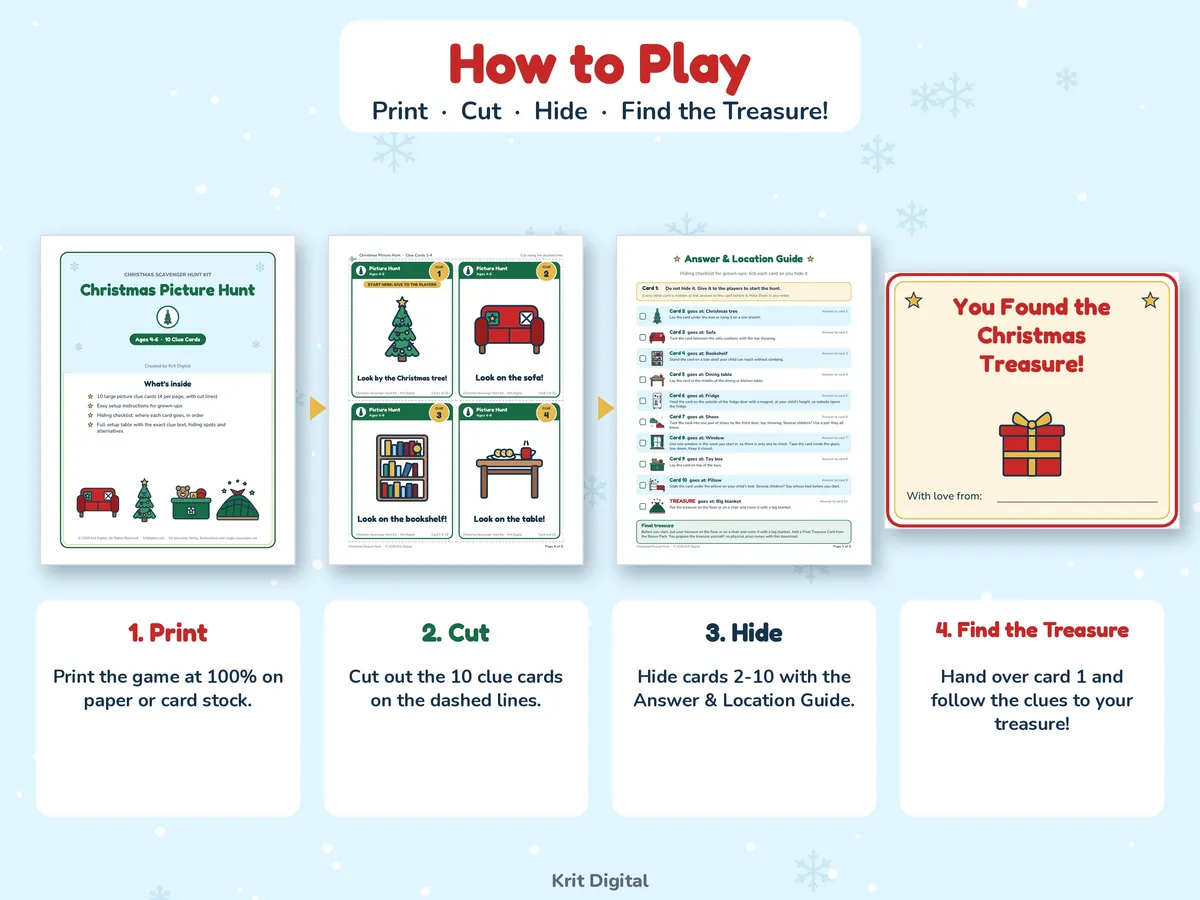
- Pick the treasure spot first. Then work backwards: decide where each clue hides, ending at the treasure.
- Write or print one clue per spot. Each clue describes the next hiding place.
- Keep a hiding checklist. Write down where every card goes, in order, so you can check your setup and help if someone gets stuck.
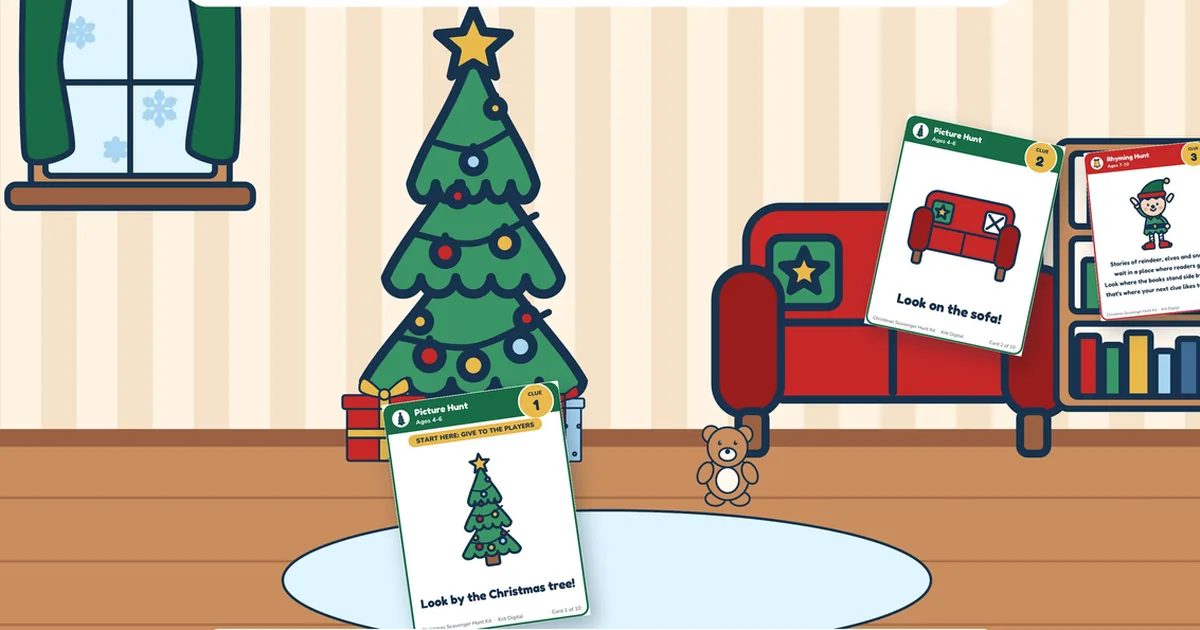
- Hide every clue except the first. Card 1 goes straight into the players’ hands.
- Say go! Kids read clue 1, find clue 2, and so on until they reach the treasure.
Christmas scavenger hunt clue ideas by age
Ages 4–6: picture clues
Young kids can’t read riddles yet, so use a big picture of the hiding spot with a few simple words:
- A Christmas tree: “Look by the tree!”
- A sofa: “Look on the sofa!”
- A fridge: “Look on the fridge!”
- A pair of shoes: “Look in your shoes!”
- A toy box: “Look in the toy box!”
Keep cards at child height and in plain sight, and stay close to help.
Ages 7–10: rhyming riddles
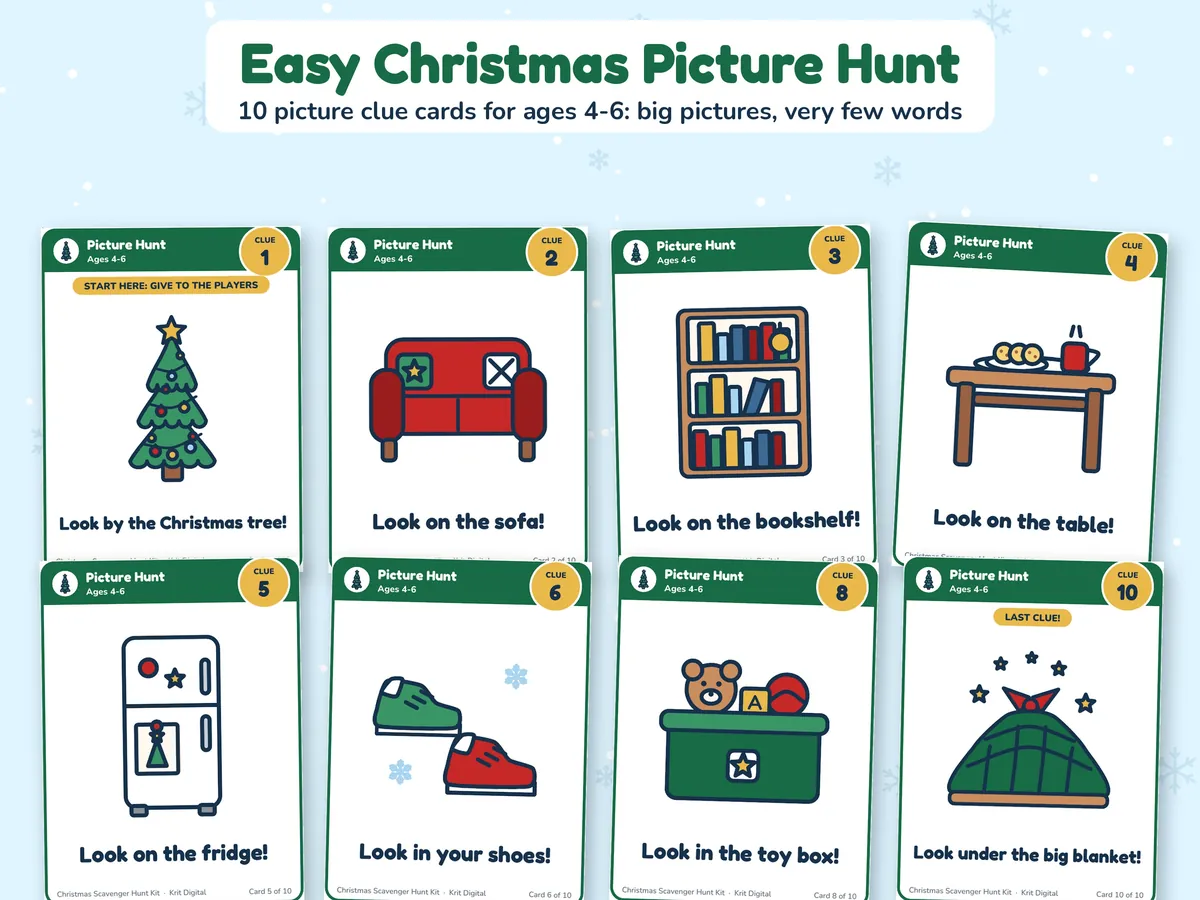
Older kids love working out a rhyme. Here are a few you can use:
- Fridge: “I keep the milk and juice so cold. Open me up, your next clue’s told!”
- Bookshelf: “Stories of elves and reindeer wait, lined up in rows, all nice and straight.”
- Bathtub: “Splish and splash, you sit in me. Look inside, your clue you’ll see!”
- Washing machine: “Round and round your clothes all go. Look on top, there’s a clue below!”
- Under a pillow: “At night you rest your sleepy head. Look underneath it, on your bed!”
Mixed ages: riddles with picture hints
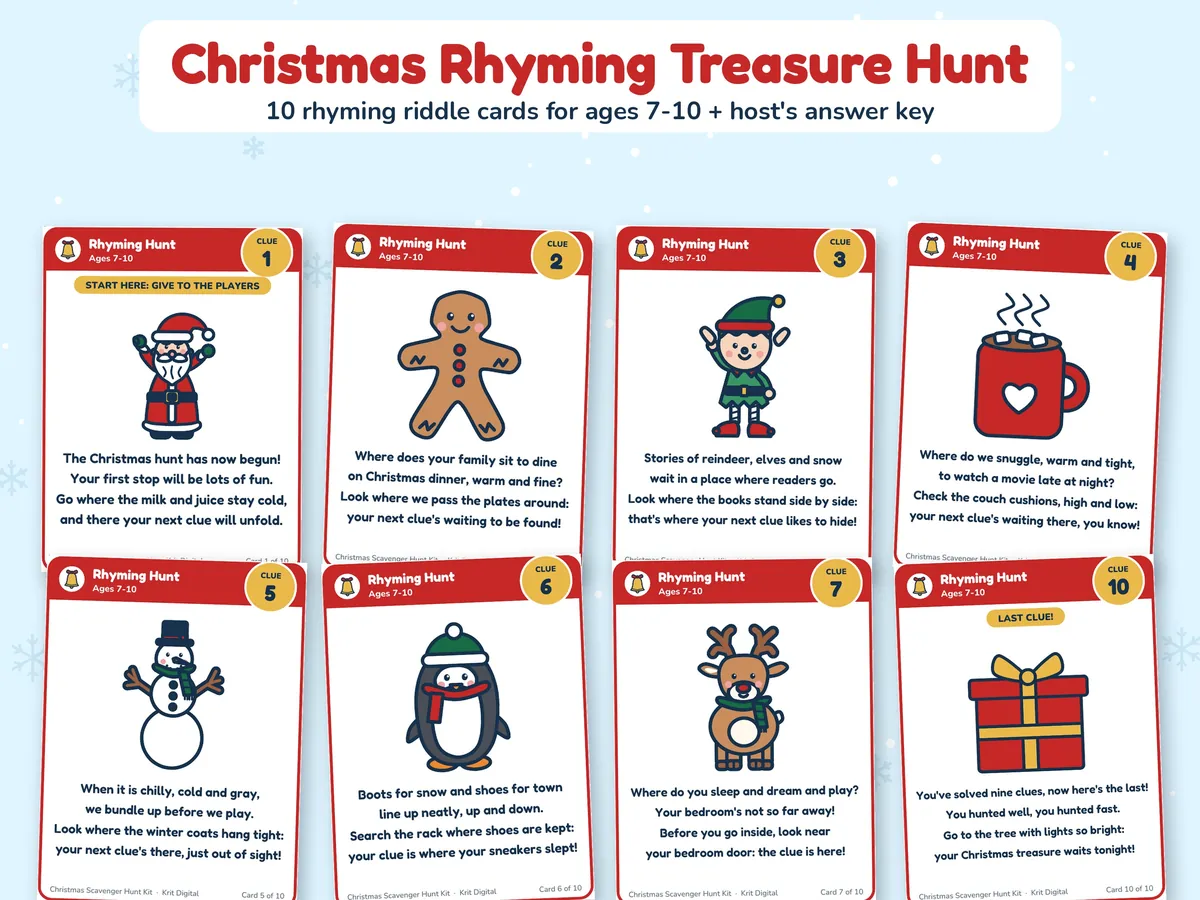
When siblings or a whole class play together, write a “Where am I?” riddle and add a small picture hint. Older kids solve the riddle, younger ones spot the picture, and everyone feels useful.
Good hiding spots (and spots to avoid)
At home: under the tree, between sofa cushions, on a bookshelf, on the fridge door with a magnet, inside a pair of shoes, on the dining table, under a pillow, in the toy box, taped inside a window.
In the classroom: the door, the whiteboard, the calendar, the pencil pot, the teacher’s desk, the reading corner, a bulletin board.
Avoid: anywhere kids would need to climb, open appliances or medicine cabinets, near the oven or fireplace, other people’s belongings, and outdoor spots near roads or water. Keep every card where a child can reach it safely.
Running a classroom Christmas scavenger hunt
- Use teams of 3 to 5 so every child takes part.
- Stagger start times by a couple of minutes, or give teams different starting clues, so groups don’t follow each other.
- Set clear rules: walk, don’t run, look with your eyes, don’t move furniture, put things back.
- Plan for pre-readers: pair them with readers, or choose clues with picture hints.
- Finish at a prize station with a small treat for every team, not just the fastest.
Treasure ideas
The treasure doesn’t need to be big. Kids are just as happy with:
- A new Christmas book or a holiday movie for family movie night
- Hot chocolate mix with mini marshmallows
- Stickers, a small craft kit or new crayons
- Matching Christmas pajamas on Christmas Eve
- A “coupon” for baking cookies, a later bedtime or choosing dinner
- A winner’s certificate with their name on it
Fun variations
- Christmas morning hunt: hide one special present and let kids follow clues to find it.
- Outdoor winter hunt: make a checklist of things to spot on a walk, like a wreath on a door, a pinecone or holiday lights.
- Make-your-own clues: let older kids write a trail for younger siblings.
- Team challenge: two teams, two clue trails, one shared treasure at the end.
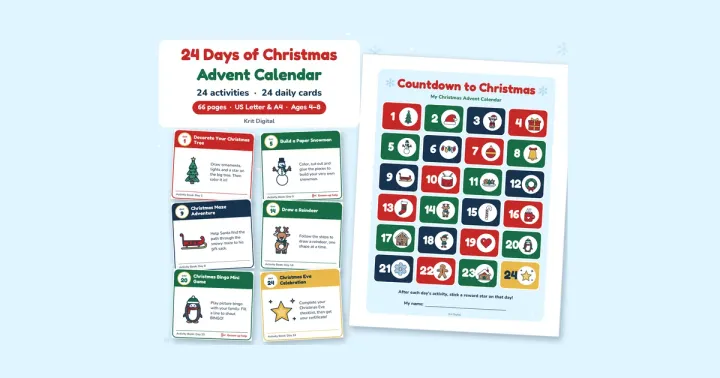
- Advent hunt: hide one small clue or activity each day in December. Our guide to advent calendar activities for kids has 24 ideas.
A ready-to-print Christmas scavenger hunt
If you’d rather skip writing clues, our Christmas Scavenger Hunt Printable has three complete hunts ready to print:
- Picture Hunt for ages 4–6: 10 big picture clue cards
- Rhyming Treasure Hunt for ages 7–10: 10 rhyming riddles and a host’s answer key
- Classroom Hunt for ages 5–10: 10 riddles with picture hints, teacher setup and a Prize Station sign
- Hiding checklists and setup tables with alternative hiding spots for every hunt
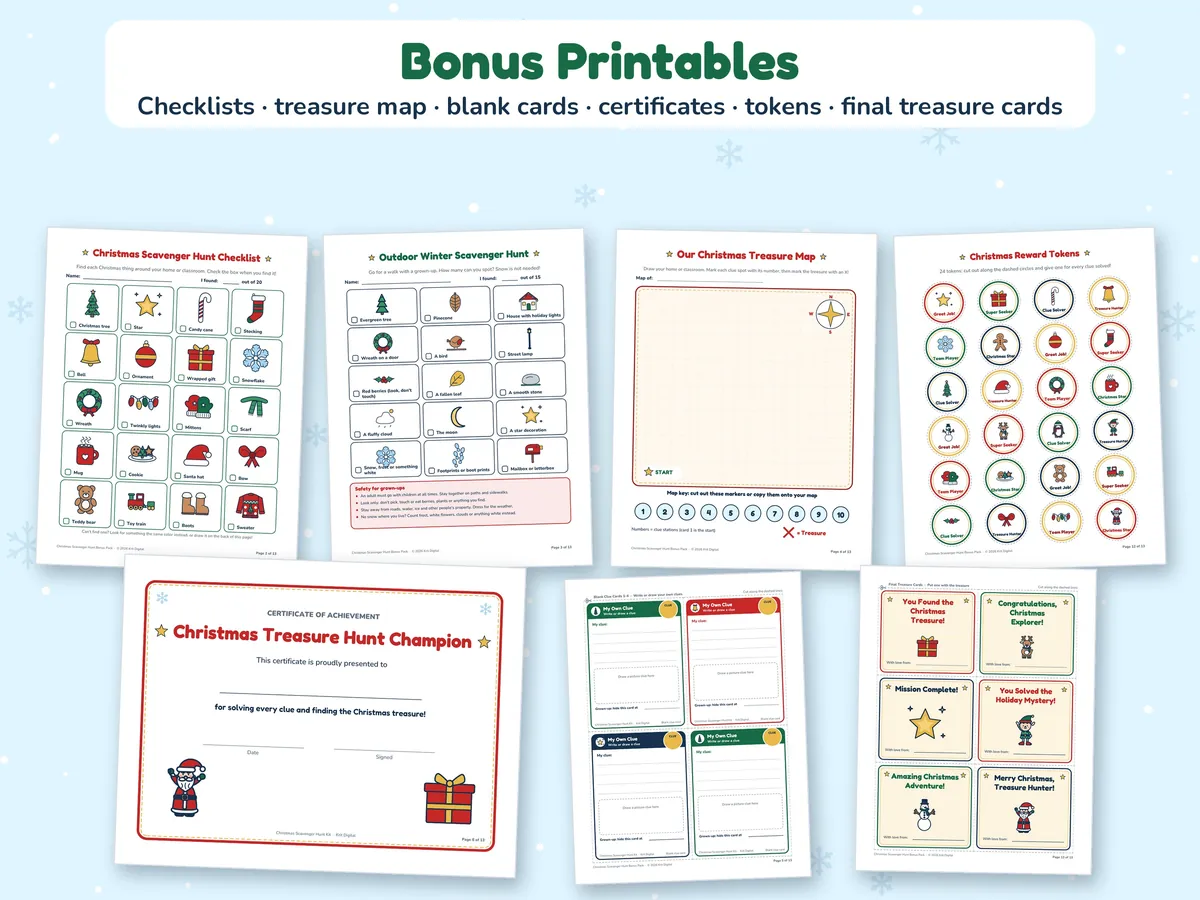
- A Bonus Pack with indoor and outdoor checklists, a treasure map, blank clue cards, certificates, reward tokens and Final Treasure Cards
- A Parent & Teacher Guide, all in US Letter and A4
More Christmas fun
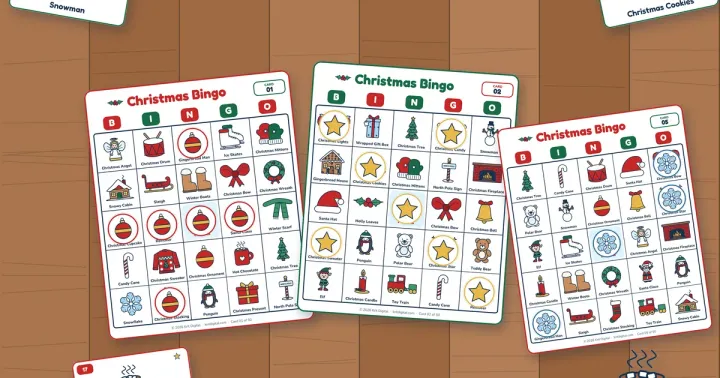
Want to try a hunt for free first? Our free indoor scavenger hunt has 20 things to find around the house. For more party games, see how to play Christmas bingo with kids, and for quiet time afterwards, our guide to Christmas activity pages for kids has plenty of ideas. Printing help is in how to print digital downloads.
Happy hunting!
Frequently asked questions
How many clues should a Christmas scavenger hunt have?
About 8 to 10 clues works well for most kids. Younger children may lose interest after 5 or 6, while older kids enjoy a longer trail with harder riddles. If you have more time, run two short hunts instead of one long one.
How do you set up a clue trail?
Hand the first clue to the players. Hide every other clue at the answer to the one before it, working backwards from the treasure. Write down where each clue goes so you can help if someone gets stuck.
What age is a scavenger hunt good for?
Kids can enjoy a hunt from about age 4. Pre-readers need picture clues and a grown-up nearby. From around age 7, kids can solve written riddles and rhymes on their own or in teams.
What can I use as the treasure?
Anything small and special: a new book, a box of hot chocolate, a holiday movie, stickers, a craft kit, or a coupon for a family activity. In a classroom, a basket of small treats or a privilege like extra recess works well.
How do you run a scavenger hunt with lots of kids?
Split them into teams of 3 to 5 and stagger the start times by a couple of minutes, or give each team its own color of clue cards. Make sure every child gets a turn to read or hold a clue.